Posts Tagged Jack The Ripper
Dr Jekyll & Mrs Hyde
Posted by Chris Niblock in art/drama, Fiction on December 4, 2023

A gothic comedy based on Robert Louis Stevenson’s The Strange Case of Dr Jekyll and Mr Hyde penned by Robin Glover
Dr Jekyll & Mrs Hyde is a monster mashup of fun at the expense of those gothic classics: Robert Louis Stevenson’s The Strange Case of Dr Jekyll and Mr Hyde, Bram Stoker’s Dracula and the infamous real-life villain, Jack the Ripper. Yet amidst the murder and mayhem, below stairs romance blossoms between housemaid Molly and stable boy Jack. Above stairs too for Utterson’s nephew Dickie and heiress, Miss Lily Castleton.
Can Dr Jekyll overcome his nemesis, Edwina Hyde? Will inspector Asinine manage to arrest the right man? Can any of them survive the arrival of the Prince of Darkness and learn to dance the Monster Mash!
Casting: 4 Women 6 Men (with doubling)
Dr Jekyll & Mrs Hyde is available from amazon.co.uk priced £5.00 https://www.amazon.co.uk/Dr-Jekyll-Mrs-Hyde-gothic/dp/1916108288/ref=sr_1
Robert Louis Stevenson (1850-1894) is perhaps best known for his novel Treasure Island, published in 1883. In it he created the classic pirate tale of buried treasure and a colourful collection of characters including: Long John Silver and the castaway, Ben Gunn and it has provided the template for all the pirate tales that have followed it.
The Strange Case of Dr Jekyll and Mr Hyde, published in 1886, is a bit of an oddity amongst Stevenson’s other tales of romance and adventure. A gothic novella about a kind and caring physician who, after drinking a drug intended to separate good from evil, inadvertently releases his psychopathic alter ego.
Note: Robin Glover is a pen name I use when writing adaptations of Shakespeare’s plays and mashups of gothic classics.
A Suitable Case for Holmes?
Posted by Chris Niblock in true crime and fiction on June 12, 2012

Recently I’ve been reading Philip Sugden’s comprehensive history of the Jack The Ripper Murders. Aside from the enduring mystery as to the identity of Britain’s most famous serial killer, the book’s pages contain some fascinating social history.
The picture, so often presented of ‘Jack’ stalking his victims through the deserted streets of London’s Whitechapel couldn’t be further from the truth. In the 1880’s the area’s tenements and ‘doss’ houses were crammed full of the transient working classes and of course prostitute,s who were up and about at all hours of the day and night. It was quite common for these workers to be setting out for, or even starting work at one, two, three or four in the morning! The Ripper frequently risked discovery and may even have been disturbed at his grisly work on several occasions.
For instance, Elizabeth Stride was killed in Dutfield’s yard just a few feet away from The International Working Men’s Club, some of whose members were still singing and drinking at the time of the murder. Her throat had been cut but, she hadn’t suffered the mutilation visited on many of the other victims. Several of the club’s members had stepped out into the yard close to the estimated time of the murder, so it’s quite possible that The Ripper was disturbed before he could do anything more.
One passage in the book leapt out at me more than any other. This was a statement made by Major Henry Smith, Acting Commissioner, who describes being roused from his bed at Cloak Lane Police Station, and jumping into a Hansom Cab on the night of the Catherine Eddowes murder. Licensed to carry two, the Commissioner was joined inside by a 15 stone Superintendent, whilst three detectives jumped on the back.
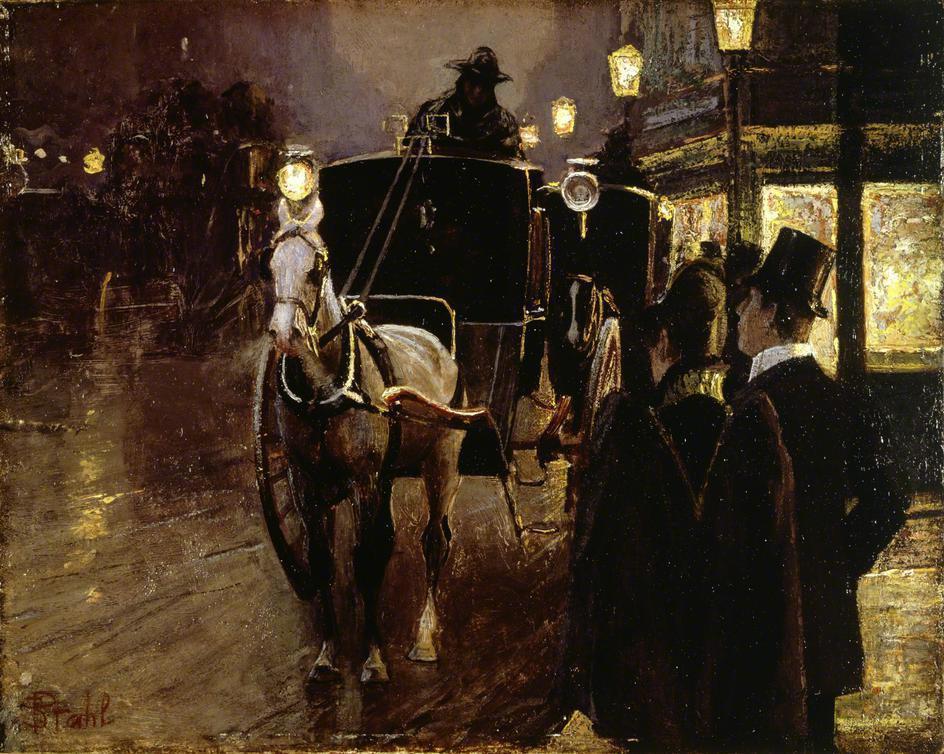
The passage was so redolent of Conan Doyle’s A Study in Scarlet where Sherlock Holmes hops on the back of a Hansom, in order to follow the ‘old crone’ who claims the ring, thought to have been dropped by the murderer of Enoch J. Drebber. ‘That’s an art which every detective should be an expert at,’ he informs Dr. Watson when retelling the story. A Study in Scarlet was first published in 1886, just two years before the Ripper murders began. This connection with Sherlock Holmes set me wondering – if a real-life Sherlock Holmes had been around in the 1880’s would we still be wondering who Jack The Ripper was?
Holmes for all his skills would have had little to go on for the victims appear to have been chosen at random. The Ripper left nothing at the scene of his crimes that could be used to identify him and, there was little or no forensic science available. Crucially the five murders were committed over a relatively short period; the first in April, the last in November 1888. Most serial killers are caught because they go on killing and, becoming careless, make a mistake which eventually leads to their capture.
Some mysteries should perhaps remain a mystery; few of us would still be interested in the Whitechapel murders of 1888, if Jack The Ripper had been caught and the mythology surrounding him had been stripped away by his unmasking.
Chris Niblock

A Stirring in the Blood

Buy it from amazon.co.uk


 A Kyndle in the Mynd