The rise and rise of the machines
Posted by Chris Niblock in science/humour, Uncategorized on December 4, 2012
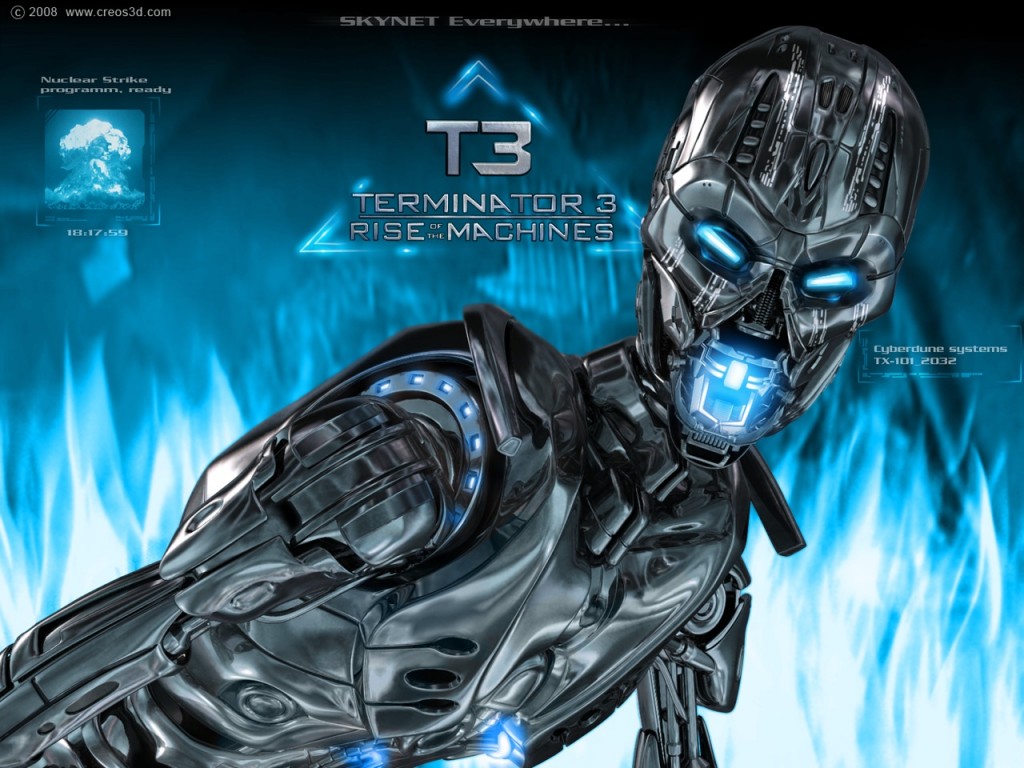
So, once again Sci-fi writers, often dismissed as purveyors of tacky pulp fiction, have turned out to be visionaries. All those stories by authors such as Philip K. Dick and Isaac Asimov, about machines in one form or another taking over, are fast becoming fact. The creators of super intelligent computers, are becoming increasingly worried that their creations will soon be more intelligent than themselves. If the nerds can’t control them – what chance have the rest of us got? We all know what happens when superior beings come up against a less advanced species: it’s a case of ‘Goodbye, and thanks for all the fish!’
Of course it’s quite possible that in failing to control global warming, we humans will do the job for them, and exterminate ourselves. All the machines have to do is bide their time and, ”Lay their plans against us” as the Martians did in H. G. Wells The War of the Worlds.
Hollywood has enjoyed considerable success in bringing these sci-fi classics to the screen and created a few of their own. In The Terminator the machines send an Android assassin back through time to kill a young boy who, if he survives, will eventually save mankind. In the light of the boffins predictions, there is a young boy living somewhere in the world right now, who should be very, very afraid . . .
That’s one step too far for moi, Felix!
Posted by Chris Niblock in science/humour on October 15, 2012

As I watched live coverage of Felix Baumgartner preparing to jump from a balloon poised on the edge of space, I couldn’t help wondering what drives some one to risk their life on what, at first glance and indeed second glance, seems a sure-fire way of getting yourself killed.
Most of us I suspect, would only contemplate jumping from a great high in moments of extremis; because our life had become intolerable or, as in the case of some of those trapped in the twin towers, because it was preferable to being burnt to death.
When I was a child, my mother would scream at me to come away from the edge if I went anywhere near a cliff-top or castle battlement. I’m not blaming her you understand, but I’ve been terrified of heights ever since. Which is why, when Felix Baumgartner stepped out onto the tiny ledge outside his capsule, I found myself shouting ‘For God’s sake Felix, come away from there!’
First Men in the Moon
Posted by Chris Niblock in spaceflight/art on August 30, 2012

H. G. Wells published his scientific romance The First Men in the Moon in 1901, but it would be another 68 years before a human being took his first tentative step onto the lunar surface. That man was Neil Armstrong and his death at the age of 82 symbolises the end of an era in the manned exploration of space. The moon landing marked an incredible leap in technology coming as it did just 65 years after the Wright brothers made the first powered flight in 1903. It owed as much to the invention of computers as it did to the space race and the two super powers obsession with ever more powerful intercontinental ballistic missiles.
I remember getting up early to watch those grainy, black and white TV pictures from the moon as Neil Armstrong stepped off the ladder and uttered those now famous words, ‘That’s one small step for a man, one giant leap for mankind.’
A further five landings followed but the American public quickly lost interest after that first lunar walkabout, and the program ended with Apollo 17, and Eugene Cernan has the dubious honour of being the last man on the moon. That was 40 years ago, and with the ending of the shuttle program in 2011, America no longer has a vehicle capable of taking men into space. Ironically they now have to rely on their old protagonists in the space race – the Russians, to transport their astronauts to the International Space Station for them.
Manned spaceflight is an expensive business and for now the machines have taken over. It’s cheaper: they don’t need oxygen, they don’t need feeding or watering. They can work in conditions that would be lethal for humans. But it’s hard to empathise with a machine, and no one who has watched a Saturn V take off, heard the awesome roar of that powerful rocket, could fail to be excited, knowing that there were three flesh and blood human beings sitting on top of it who could be blown to smithereens at any moment, if any one of the thousands of components were to fail.
So far we’ve only explored our own backyard, cosmically speaking. Armstrong and the other eleven Apollo astronauts who have walked on the moon were pioneers. They led the way. Others will follow. There is talk about sending men to Mars, but it will be decades before another human being steps off a ladder and makes the first footprint in the dust of an alien world.
Meanwhile Neil Armstrong, we salute you and all the other astronauts who made that first decade of manned spaceflight so exciting to watch.
Two Twisted Tales you can download for FREE!
Posted by Chris Niblock in Free Fiction on July 12, 2012

Story 1: ‘Nights Alone with Garbo’
There are some games you just shouldn’t play and adultery is one of them. Lust and greed make for volatile bed-fellows and things can easily get out of hand . . .
Story 2: ‘Emily on the Edge’
A psychiatrist puts his own sanity on the line when he resorts to role-playing in a desperate attempt to uncover the mysterious forces that lie behind a patient’s multiple personalities.
Download FREE from Smashwords
More than 300 downloads so far (20.07.12)
A Suitable Case for Holmes?
Posted by Chris Niblock in true crime and fiction on June 12, 2012

Recently I’ve been reading Philip Sugden’s comprehensive history of the Jack The Ripper Murders. Aside from the enduring mystery as to the identity of Britain’s most famous serial killer, the book’s pages contain some fascinating social history.
The picture, so often presented of ‘Jack’ stalking his victims through the deserted streets of London’s Whitechapel couldn’t be further from the truth. In the 1880’s the area’s tenements and ‘doss’ houses were crammed full of the transient working classes and of course prostitute,s who were up and about at all hours of the day and night. It was quite common for these workers to be setting out for, or even starting work at one, two, three or four in the morning! The Ripper frequently risked discovery and may even have been disturbed at his grisly work on several occasions.
For instance, Elizabeth Stride was killed in Dutfield’s yard just a few feet away from The International Working Men’s Club, some of whose members were still singing and drinking at the time of the murder. Her throat had been cut but, she hadn’t suffered the mutilation visited on many of the other victims. Several of the club’s members had stepped out into the yard close to the estimated time of the murder, so it’s quite possible that The Ripper was disturbed before he could do anything more.
One passage in the book leapt out at me more than any other. This was a statement made by Major Henry Smith, Acting Commissioner, who describes being roused from his bed at Cloak Lane Police Station, and jumping into a Hansom Cab on the night of the Catherine Eddowes murder. Licensed to carry two, the Commissioner was joined inside by a 15 stone Superintendent, whilst three detectives jumped on the back.
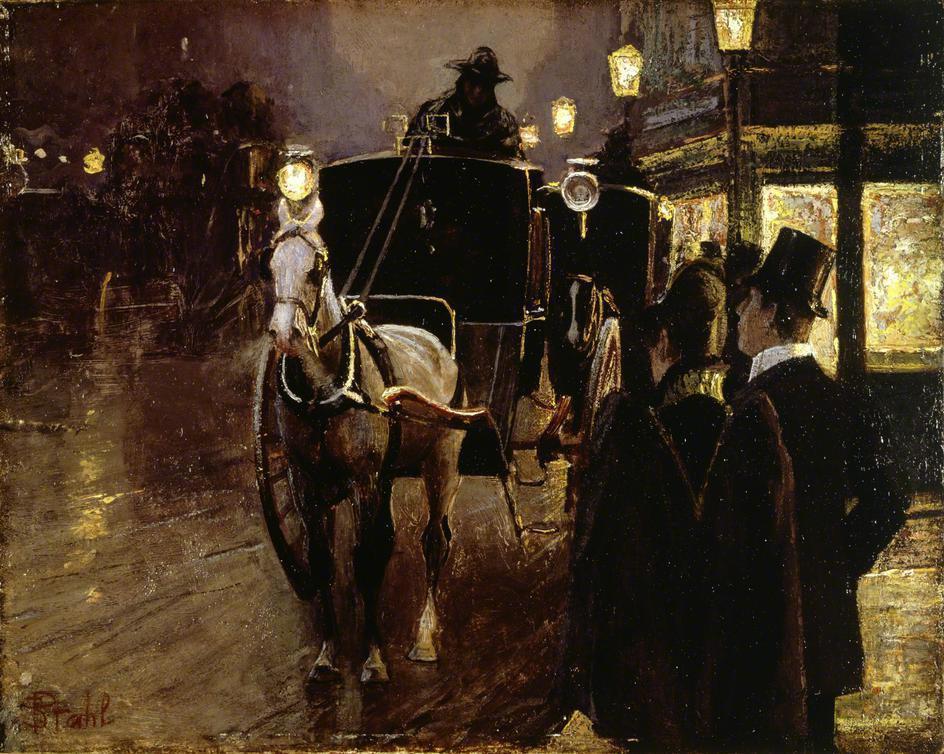
The passage was so redolent of Conan Doyle’s A Study in Scarlet where Sherlock Holmes hops on the back of a Hansom, in order to follow the ‘old crone’ who claims the ring, thought to have been dropped by the murderer of Enoch J. Drebber. ‘That’s an art which every detective should be an expert at,’ he informs Dr. Watson when retelling the story. A Study in Scarlet was first published in 1886, just two years before the Ripper murders began. This connection with Sherlock Holmes set me wondering – if a real-life Sherlock Holmes had been around in the 1880’s would we still be wondering who Jack The Ripper was?
Holmes for all his skills would have had little to go on for the victims appear to have been chosen at random. The Ripper left nothing at the scene of his crimes that could be used to identify him and, there was little or no forensic science available. Crucially the five murders were committed over a relatively short period; the first in April, the last in November 1888. Most serial killers are caught because they go on killing and, becoming careless, make a mistake which eventually leads to their capture.
Some mysteries should perhaps remain a mystery; few of us would still be interested in the Whitechapel murders of 1888, if Jack The Ripper had been caught and the mythology surrounding him had been stripped away by his unmasking.
Featured Painting: Jimi Hendrix
Posted by Chris Niblock in art/music, Uncategorized on June 2, 2012

I painted this portrait of Jimi Hendrix back in 2006. It’s based on a photo from the album sleeve of Electric Ladyland. I could have sold it several times over but I had already made a present of it to my partner Maggie. Accurately rendering the colours and textures of the outfit Hendrix was wearing proved to be the hardest part for me. The outfit consists of what appears to be a velvet jacket, worn over a black, leather waistcoat and shirt of many colours which subtly blend into one another. It took many hours of work to get it right.
Artwork copyright Chris Niblock 2006
What is the meaning of it Watson?
Posted by Chris Niblock in science/humour on May 8, 2012

The search for the Higgs Boson took a bizarre turn this week with the announcement that there could be at least five different kinds of the God Particle, maybe more. Not so long ago the scientists at Cerne were confidently predicting that they would find the elusive Higgs Boson this year, now it seems the search could go on forever.
What’s going on here? Are the little devils breeding like rabbits or are the scientists simply trying to ensure that in these cash straightened times they will retain their funding. After all, once they find the God Particle, it will be a case of job done and so long professor!
You have to admit, it’s a pretty good wheeze. Anytime the boffins at Cerne feel their jobs are under threat they can simply increase the population of Higgs Bosons awaiting to be discovered. I doubt that Sherlock Holmes or even his arch enemy Professor Moriarty would stand much chance of unravelling this mystery.
Featured Painting: ‘The Clock Struck Twelve’
Posted by Chris Niblock in art on April 30, 2012

‘The Clock Struck Twelve’
My four-year old grand-daughter loves animated films, which gives me a great excuse to watch them too. Amongst her favourites are the Disney versions of popular fairy tales. I was inspired to paint ‘The Clock Struck Twelve’ after watching Cinderella.
Original painting in oils on canvas: copyright Chris Niblock 2012
Size: 790 mm x 1000 mm £450.00
Back Dated has been updated!
Posted by Chris Niblock in writing fiction/humour on February 7, 2012
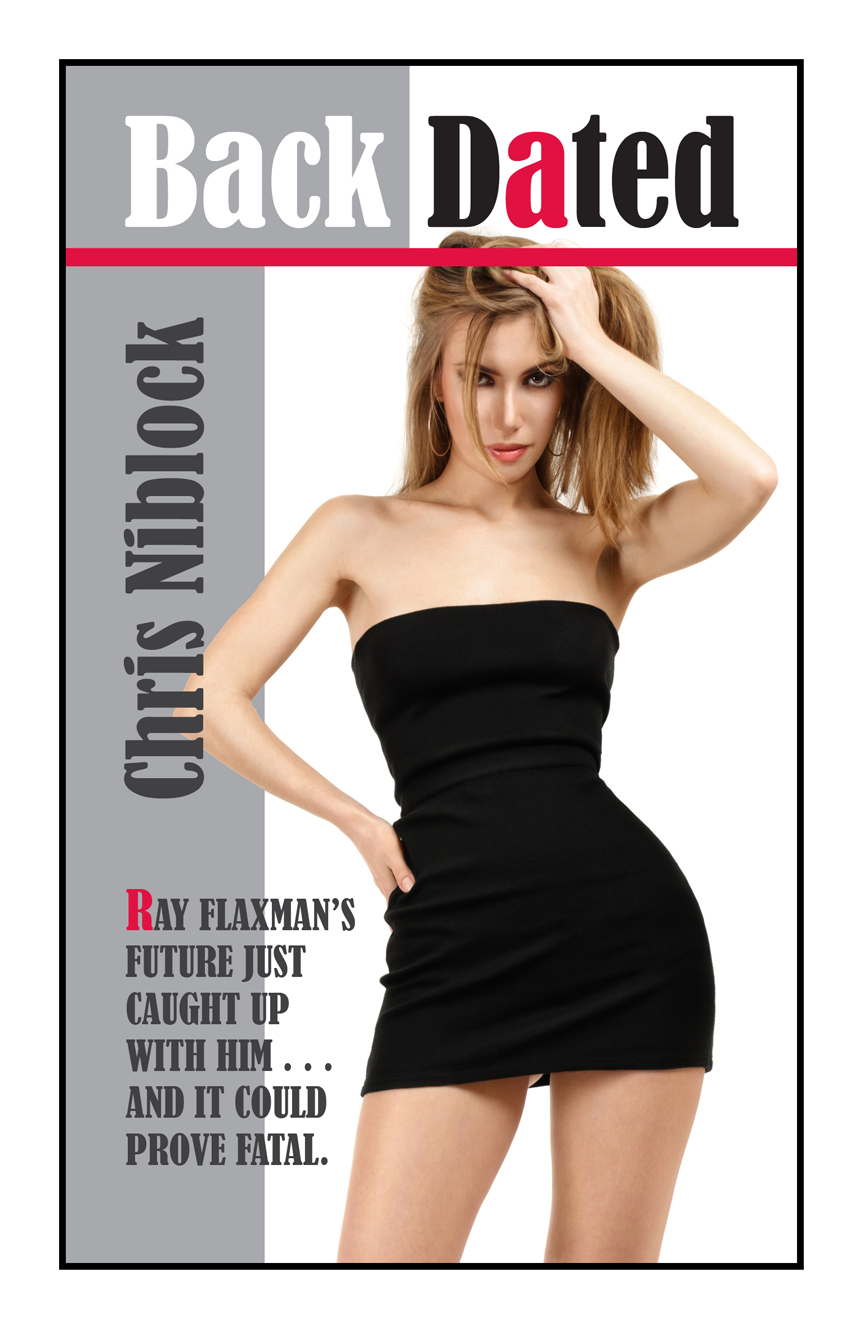
Back dated has been completely revised and edited to eliminate the typos mentioned by some reviewers of the first edition.Only £1.99 ($2.99 in the USA) and for Prime members it’s absolutely FREE!
“Back Dated has an original and interesting plot that engages the reader very quickly and holds them right up to the end. Niblock maintains tension and interest throughout and Ray Flaxman is a flawed but interesting character. This is a book from an author with great potential.”
Jill Murphy – The Bookbag
Synopsis: In the post crash Britain of 2009, the state of the economy is the least of sci-fi writer Ray Flaxman’s problems. His fiancée Francesca is pushing him to set a date for their wedding; an unknown admirer is bombarding him with love letters, and he’s not going to meet the deadline for completing the last of his Halgaar trilogy of novels.
Returning to London after a romantic weekend in Oxford with Francesca, Ray is dismayed to find his flat has been ransacked. When he discovers only the love letters and a photo of his fiancée have been taken he fears his little secret is about to be made public. Matters become even more complicated when a strange young woman claiming to have come from the future, turns up at the flat and demands Ray get her pregnant – again!
At first Ray dismisses her wild claims as the ravings of a deranged fantasist but then the girl mysteriously disappears. After a bruising encounter with her formidable mother, and her violent henchman, Ray begins to take the girl’s story far more seriously.
As the odds against him mount, Ray is forced to confront a future in which men are facing extinction and women no longer need them. A reluctant hero, Ray has to step up to the plate to save not only himself and the girl, but the rest of the male species.
Memorable Quotes
“In the lounge, the entire contents of a large bookcase had been thrown out onto the floor. Spines broken, dust covers ripped off, the precious volumes lay there like a flock of birds with broken wings.”
“She was so close, I could see the tiny beads of perspiration that had gathered in the notch at the base of her throat, the quickened beat of her heart pulsing in a vein in her neck. Our eyes caught and held for a moment, then each of us, embarrassed by this shared moment of intimacy, turned away and busied ourselves with other matters.”
“One look into their eyes and I knew I was in big trouble: there was nothing there. It was like gazing into the eyes of the dead. Testosterone oozed from every pore and fibre, reminding me of those Russian female shot putters and javelin throwers from the Cold War period, whose gender couldn’t be determined, even after exhaustive scientific tests. Bond got Pussy Galore. I’d got the ugly sisters, but there would be no pantomime play acting from these two: these ‘Ladies’ meant business.”
Just click on the links below the smaller pic of the book’s cover on the right and it will take you straight to Back Dated’s page on Amazon.co.uk or Amazon.com.
Don’t have a Kindle? No problem, Amazon thoughtfully provide FREE App’s which enable you to download my eBook onto an iPad, iPhone and similar devices, or onto your laptop or PC. You can even read the first couple of chapters for Free before buying! So, what have you got to lose?
Now available in the epub format from Smashwords and Kobo.
If you are an author yourself, and you’re looking for someone to format your book for you, I can thoroughly recommend a fellow author and eBook formatter, Tim C. Taylor. You will find a link to his site at the foot of the list of links to my novel.
Row Britannia!
Posted by Chris Niblock in life/humour on January 31, 2012

The group behind proposals to build a replacement for the royal yacht Britannia have been unveiling some of the ideas under consideration; these include a design based on a roman galley. In roman times these largely muscle-powered ships were manned by slave labour, but a group of tory back-bench MP’s are said to be very interested in a scheme which would see crews being drawn from amongst the unemployed, and in particular those receiving job seekers allowance.
‘It would give the unemployed a chance to serve their country and at the same time earn some of their benefit. It would also be good for the environment, so it’s a win/win situation for everybody,’ the spokesperson gleefully declared.
It’s envisaged that each of the unemployed workers would be expected to spend at least one week a year rowing members of the royal family and visiting dignitaries up and down the Thames.
The unions have condemned the proposed scheme outright but when asked to comment, a labour spokesperson said, ‘We haven’t ruled anything in and we haven’t ruled anything out at this stage’. When it was pointed out that this sounded very like a rowing analogy, the spokesperson admitted that he had rowed for his college whilst at university but was somewhat rusty with an oar these days.
Anyone eager to be shackled to the royal rowlocks should e-mail their cv to:
Oarspersons will be required to sing work songs including:
Row, row, row Britannia gently up the stream,
Verily, verily, verily, verily forget the downturn, live the dream.
Pictured: Charlton Heston in a scene from the movie epic, Ben – Hur (Metro-Goldwyn-Mayer 1959)
Chris Niblock

A Stirring in the Blood

Buy it from amazon.co.uk


 A Kyndle in the Mynd